What Are PN and PDRN, and How Are They Different?
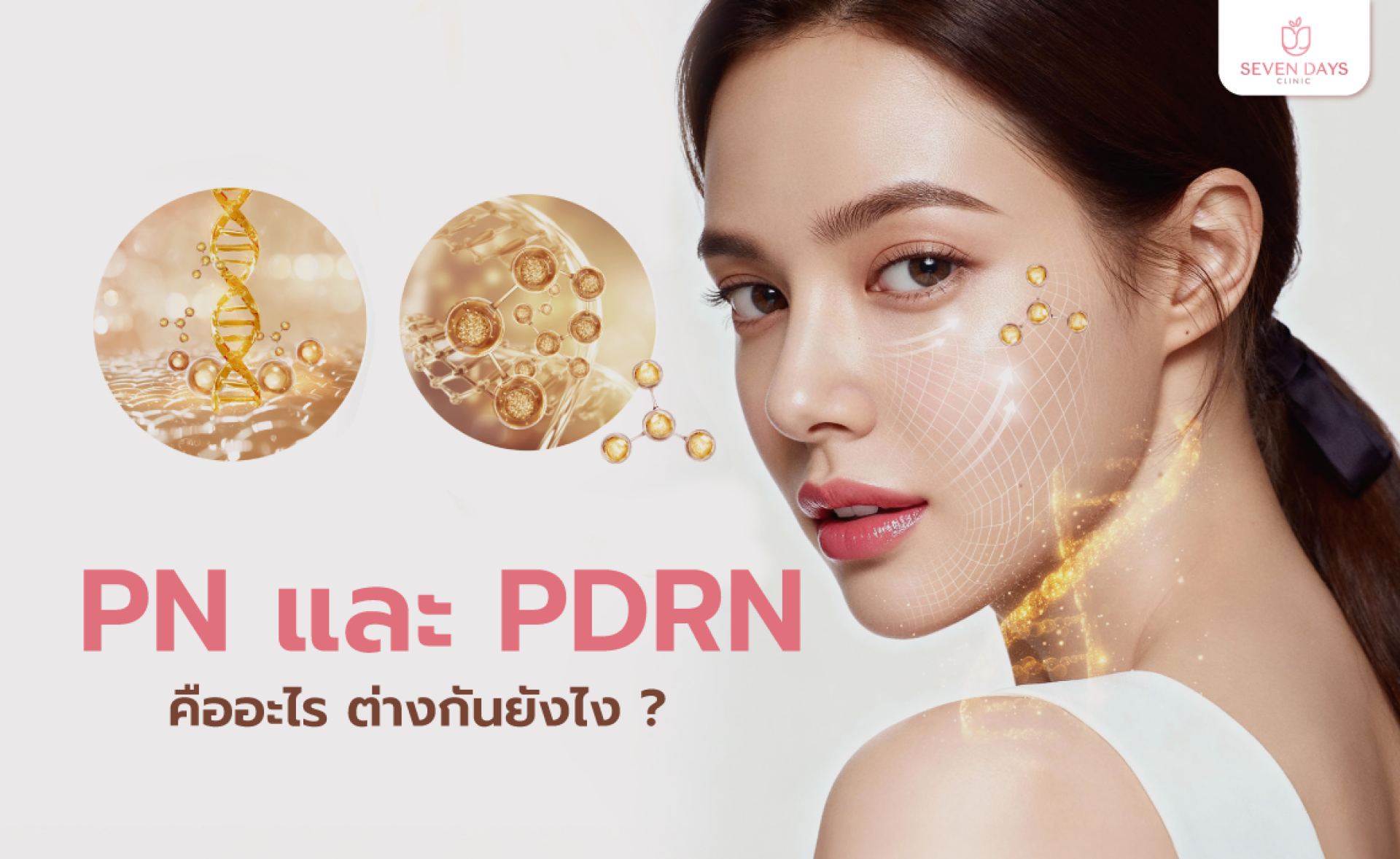
Why Is Everyone Talking About PN and PDRN,
and What Makes Them Different from Other Aesthetic Treatments?
Why Is Skin Longevity Becoming So Popular?
Today, beauty trends are clearly shifting. Instead of wanting overly enhanced or artificial-looking skin, more people are focusing on achieving healthy, clear, and naturally strong skin from within.
This is why the concept of Skin Longevity has become increasingly popular among people who care about long-term skin health. Skin Longevity is not just about slowing down aging — it is about maintaining strong, resilient, and healthy-looking skin over time, rather than achieving only temporary beauty results.
When it comes to deep skin rejuvenation treatments, many people are now familiar with PN and PDRN. These are regenerative ingredients that work at the cellular level to help repair and restore the skin from within. However, many people still wonder what they actually are, how they differ from each other, and which one may be more suitable for their skin concerns. Today, Seven Days Clinic is here to explain.
What Are PN and PDRN?
PN (Polynucleotide) is a substance extracted from salmon or trout DNA. It consists of long-chain molecules with a relatively high molecular weight, generally over 1,000 kDa, and is typically more concentrated than PDRN. Because of its stable and highly structured molecular composition, PN is considered more durable and structurally stable.
Due to these properties, PN has been widely developed and used in medical materials and aesthetic skin treatments that require high structural stability and long-term skin restoration support.
PDRN (Polydeoxyribonucleotide) is also derived from salmon DNA, commonly extracted from salmon sperm cells. However, it consists of shorter molecular chains with a lower average molecular weight, typically around 350 kDa or less.
Because of its smaller molecular size and different manufacturing process, PDRN has been developed primarily for medical and tissue-repair applications, especially in treatments related to tissue regeneration and skin recovery.
What Is the Difference Between PN and PDRN?
Although both PN and PDRN are derived from salmon DNA and are widely used in medical and aesthetic fields for tissue regeneration and skin rejuvenation, they differ in molecular structure, molecular size, and manufacturing process — all of which influence how they are developed and used.
1. Molecular Weight
- PN (Polynucleotide) consists of longer molecular chains and has a higher molecular weight, generally over 1,000 kDa.
- PDRN (Polydeoxyribonucleotide) contains shorter molecular chains with an average molecular weight of around 350 kDa or lower.
- PN has a higher concentration and greater structural stability, allowing it to maintain its integrity more effectively in certain medical and aesthetic formulations.
- PDRN, on the other hand, has a smaller molecular structure, which makes it suitable for different types of regenerative and tissue-repair applications.
3. Product Development and Applications
- PN is commonly developed into medical-grade materials and skin rejuvenation products designed to support long-term skin quality and structural restoration.
- PDRN is more commonly developed as a pharmaceutical or regenerative ingredient used in tissue recovery and skin healing processes.
Who Is PN Suitable For?
PN (Polynucleotide) is generally suitable for people looking to restore and strengthen the skin at a structural level. It is especially beneficial for those who feel that their skin has become weaker, more fragile, or slower to recover over time. The concept behind PN focuses on long-term skin quality improvement, strengthening the skin from within, and helping restore overall skin balance.
PN may be suitable for people with:
- Thin, fragile, or sensitive skin
- Skin that has undergone frequent laser treatments or aesthetic procedures
- Early skin laxity or loss of firmness
- Dull, tired-looking skin with slower recovery ability
Who Is PDRN Suitable For?
PDRN (Polydeoxyribonucleotide) is suitable for people who want to restore a healthier, more radiant complexion. It is especially beneficial for those with tired-looking, dehydrated, or unbalanced skin that needs extra care to regain smoothness, hydration, and a naturally healthy glow.
PDRN may be suitable for people with:
- Dull or fatigued skin caused by lack of rest
- Dehydrated skin lacking moisture and plumpness
- Red, sensitive, or easily irritated skin
- Skin affected by pollution or sun exposure that needs recovery support
- Beginners who are starting deeper skin rejuvenation treatments
- Those who want naturally glowing and healthy-looking skin
How to Care for Your Skin After PN and PDRN Treatments
After undergoing PN or PDRN treatments, the skin may experience a short recovery period. Although these treatments focus on skin regeneration and restoration, proper aftercare is important to maximize results and reduce the risk of irritation.
Post-Treatment Care Tips
- Avoid wearing makeup for the first 24 hours (or follow your doctor’s instructions)
- Avoid scrubs, exfoliants, fruit acids, and retinol products for 5–7 days after treatment
- Avoid excessive heat such as saunas, steam rooms, or intense exercise for 1–2 days
- Apply sunscreen regularly and avoid direct sun exposure
- Use gentle skincare products focused on hydration and strengthening the skin barrier
- Avoid massaging, pressing, or squeezing the treated areas
- Mild bruising or skin sensitivity may improve within 5–10 days
In general, small needle marks or mild redness may occur after treatment, but these usually improve gradually within a few days. However, if experience unusual symptoms such as excessive swelling, severe pain, or prolonged redness, you should consult your doctor immediately.
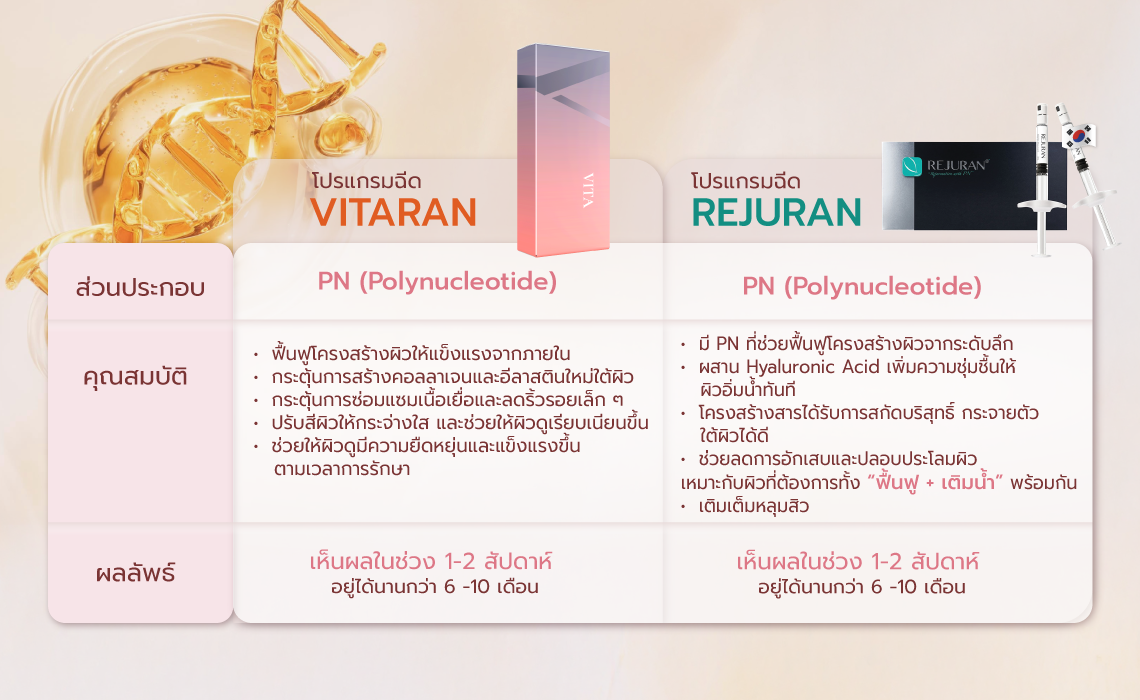
PN Skin Rejuvenation Treatments
Treatments in the PDRN Category
The P-Cell Injection Program is a Skin Booster treatment designed to restore and nourish the skin from within. Its key ingredients include salmon DNA extract (Polydeoxyribonucleotide / PDRN) combined with Hyaluronic Acid (HA), which helps improve skin hydration and create a plumper, healthier-looking complexion. The treatment is typically injected into the dermal layer of the skin, allowing the active ingredients to work directly where the skin needs restoration most. Therefore, this treatment belongs to the PDRN category rather than the PN category.
The P-Cell Injection Program offers several skin-rejuvenating benefits, including:
- Deeply replenishing moisture and improving skin hydration for a healthy, radiant glow
- Helping the skin feel smoother, softer, and more elastic
- Supporting skin cell regeneration and strengthening overall skin quality
- Improving skin brightness and promoting a more even-looking complexion
- Helping reduce the appearance of acne scars or shallow skin depressions in some cases
- Minimizing the appearance of pores and improving overall skin texture