Callused Hands, Dark Knees & Rough Elbows from Working Out
How to Treat Callused Hands, Dark Knees, and Rough Elbows from Working Out
For fitness enthusiasts, sweat and post-workout acne are not the only skin concerns that may occur with regular physical activity. Those who enjoy outdoor sports may also experience sun-related skin problems, such as sunburn, dark spots, freckles, and uneven skin tone. However, another common concern that is often overlooked is rough, callused, and darkened skin caused by working out.
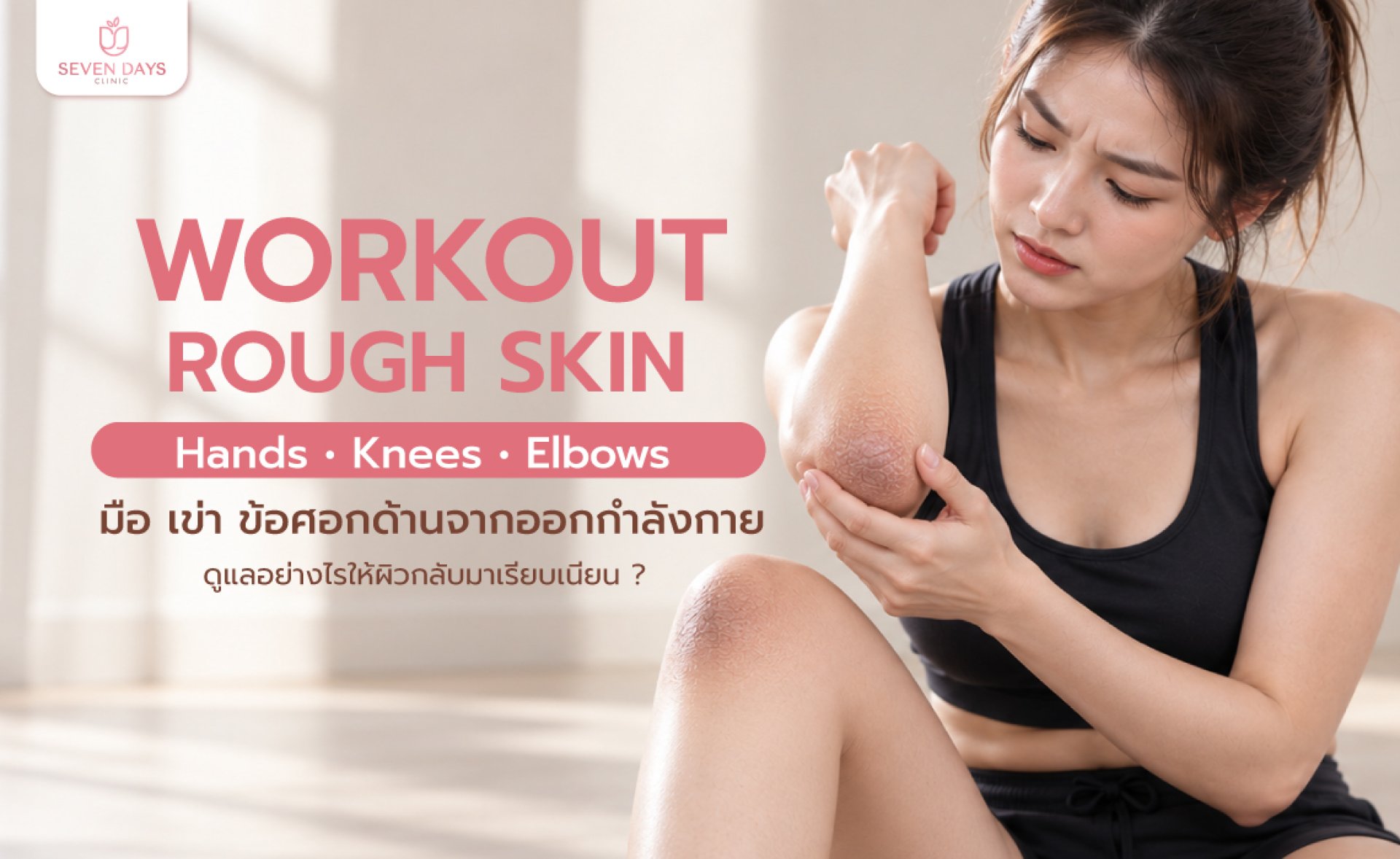
Peeling palms, hand calluses, rough elbows, and dark knees can develop due to repeated friction, pressure, or frequent contact with gym equipment and exercise surfaces. Over time, the affected skin may become thicker, rougher, harder, and darker than the surrounding areas.
In this article, Seven Days Clinic explains why working out can cause callused and darkened skin, which sports and activities are more likely to cause these concerns, and how to care for and prevent rough skin, so you can continue enjoying an active lifestyle while taking better care of your skin.
What Causes Callused Hands, Dark Knees, and Rough Elbows from Working Out?
Callused hands, rough knees, and rough elbows among people who work out regularly are commonly caused by repeated friction, pressure, and contact between the skin and surfaces or sports equipment, such as dumbbells, barbells, exercise mats, and sports flooring.
When the same area of skin is repeatedly exposed to friction or pressure, the skin naturally responds by thickening its outermost layer to protect itself. Over time, this can lead to the formation of a callus, causing the affected area to feel thicker, harder, and rougher than the surrounding skin.
Repeated friction and irritation may also contribute to post-inflammatory hyperpigmentation (PIH), which can cause the affected area to appear darker. This is commonly noticeable on areas such as the knees and elbows, particularly in individuals who are more prone to developing hyperpigmentation.
The location of calluses and rough skin may vary depending on the type of sport or physical activity. For example, weight training and pull-up exercises can cause calluses on the palms due to repeated gripping of dumbbells or bars. Activities that require frequent pressure or contact between the knees or elbows and the floor may similarly cause these areas to become rough, thickened, or darker over time.
However, dark knees and dark elbows are not always caused by working out. Skin darkening and thickening can have several possible causes. If the affected area becomes unusually dark or thick, changes noticeably, or is accompanied by other symptoms, consulting a doctor for an appropriate assessment is recommended.
Why Do People Who Work Out Regularly Develop Calluses and Darkened Skin More Easily?
People who work out regularly may be more likely to develop calluses, rough skin, and darkened areas on certain parts of the body. This is mainly because the skin is repeatedly exposed to friction and pressure from gripping equipment, supporting body weight, or coming into contact with exercise mats and other surfaces.
When the same area is repeatedly exposed to friction, the skin naturally protects itself by thickening its outermost layer. Over time, this can develop into a callus, which typically feels thicker, harder, and rougher than the surrounding skin.
Several other factors can make rough and darkened skin from working out more noticeable, including:
- Repeated friction – Gripping dumbbells, barbells, pull-up bars, or sports equipment can repeatedly rub against the skin and contribute to callus formation.
- Pressure on the skin – Supporting body weight on the hands, knees, or elbows can cause the skin in these areas to become thicker and rougher over time.
- Sweat and moisture – Excess moisture may make the skin more susceptible to irritation and friction during physical activity.
- Dry skin – A lack of moisture can make existing calluses appear rougher and may contribute to cracking, peeling, or flaking.
Repeated irritation or inflammation – Ongoing irritation may lead to post-inflammatory hyperpigmentation (PIH), causing the affected skin to appear darker than the surrounding area.
Therefore, callused and darkened skin among people with an active lifestyle is not necessarily caused by poor hygiene. It can simply be the result of repeated friction, pressure, and regular use of the same areas of skin during sports and physical activities.
Which Sports and Workouts Commonly Cause Callused Hands, Rough Knees, and Elbows?
Certain sports and workouts are more likely to cause hand calluses, rough knees, and rough elbows, particularly activities that involve repeated gripping, pressure, or contact with equipment and surfaces.
- Weight Training → Calluses commonly develop on the palms and at the base of the fingers due to repeated gripping of dumbbells and barbells.
- CrossFit / Pull-Ups → Repeated gripping and pulling on bars can cause the palms to become callused, thickened, or even peel.
- Climbing / Bouldering → Frequent contact with climbing holds and supporting body weight through the hands can cause calluses on the palms and fingers.
- Tennis / Badminton → Repeated gripping and movement of the racket can create friction on the palms and fingers, potentially leading to rough or thickened skin.
- Cycling → Holding the handlebars and placing pressure on the hands for extended periods may contribute to calluses and rough skin on the palms.
- Yoga / Pilates → Certain positions that place the knees or elbows against an exercise mat may cause repeated pressure and friction in these areas.
- Plank / Functional Training → Exercises that place the elbows and forearms against the floor or mat may lead to rough or thickened skin from repeated pressure.
- Volleyball → Frequent kneeling, diving, and contact with the court may contribute to rough skin on the knees and arms.
How to Prevent Calluses and Rough Skin from Working Out
Although regular workouts can cause repeated friction and lead to calluses or rough skin in certain areas, there are several ways to minimize friction and prevent the skin from becoming excessively thick, dry, or rough.
- Use protective gear to reduce friction – Wear workout gloves, knee pads, or other protective equipment to help reduce direct friction and pressure on areas that frequently come into contact with gym equipment or the floor.
- Choose a suitable exercise mat – Use a mat with adequate cushioning and thickness, especially for workouts that require the knees or elbows to regularly come into contact with the floor.
- Adjust your grip on workout equipment – Avoid gripping dumbbells, barbells, or pull-up bars more tightly than necessary. Using an appropriate grip may help reduce excessive pressure and friction on the palms.
- Moisturize regularly – Apply moisturizer to maintain skin hydration and help prevent dryness, roughness, peeling, and cracking, particularly on the hands, knees, and elbows.
- Use exfoliating skincare ingredients appropriately – Products containing ingredients such as urea, AHA, or lactic acid may help soften and smooth thick, rough skin. Choose a concentration suitable for your skin type and avoid using exfoliating products on irritated or broken skin.
Avoid picking, peeling, or cutting calluses yourself – Removing callused skin incorrectly may cause wounds, irritation, or increase the - risk of infection.
- Take care of irritated skin early – If you notice redness, burning, tenderness, or abrasions caused by friction, temporarily reduce activities that put additional pressure on the affected area and allow the skin time to recover.
- Apply sunscreen to exposed areas – This is particularly important for outdoor sports. Protecting the skin from UV exposure may help prevent existing dark spots on the knees, elbows, or arms from becoming more noticeable.
The key to preventing calluses and rough skin from working out is to reduce repeated friction while keeping the skin adequately moisturized. You do not necessarily need to stop working out—adjusting your technique, using protective equipment, and consistently caring for high-friction areas can help keep the skin smoother and healthier.
Treatments for Rough and Darkened Skin at Seven Days Clinic
1. Skin Bright Pigmentation Laser Program
The Skin Bright Program uses Q-Switched Nd:YAG Laser technology to target excess melanin in the skin. The laser delivers short pulses of energy to areas of pigmentation, breaking the pigment into smaller particles that are gradually cleared through the body’s natural processes.
For people who work out or play sports regularly, the Skin Bright Program can be used to address dark spots and uneven skin tone on the knees, elbows, and other areas affected by repeated friction. The treatment focuses on excess pigmentation, helping darkened areas gradually appear lighter and promoting a brighter, more even-looking skin tone.
Suitable for:
- Dark knees or dark elbows
- Hyperpigmentation caused by repeated friction
- Uneven skin tone on the knees and elbows
- Dull or darkened skin caused by excess melanin
However, if the affected area also has thickened skin or calluses, treating pigmentation alone may not address every underlying cause. A consultation with a doctor is recommended to assess the skin condition and determine an appropriate treatment plan.
2. IPL Laser Program
The IPL (Intense Pulsed Light) Program uses broad-spectrum light energy to address various skin concerns, including pigmentation, dark spots, and uneven skin tone. It may be suitable for those looking to improve the overall appearance of darkened skin around the knees or elbows, helping the skin appear brighter and more even-toned.
Suitable for:
- Dull or darkened skin around the knees and elbows
- Uneven skin tone
- Certain types of dark spots and pigmentation
- Those looking to improve overall skin brightness
It is important to note that dark knees and dark elbows can have several possible causes, including repeated friction, dry skin, a buildup of dead skin cells, and increased pigmentation. Therefore, a consultation with a doctor is recommended before treatment to assess the skin and determine the most appropriate approach for each individual.
For athletes and those who work out regularly, concerns such as hand calluses, dark knees, dark elbows, and friction-related hyperpigmentation can initially be managed by following the skincare recommendations above, reducing repeated friction, and keeping the skin properly moisturized.
However, if darkened areas have persisted for a long time, have not improved with at-home care, or you are looking for additional treatment options, you can consult a doctor at Seven Days Clinic for a skin assessment and a personalized treatment plan.
Staying active helps keep your body strong, and taking care of your skin alongside your fitness routine can help you enjoy the sports and activities you love with greater confidence every day.