What Is Microneedling? How Does It Differ from Skincare?
What Is Microneedling? How Does It Differ from Skincare?
Microneedling: An Option for Smoother, Healthier-Looking Skin
Microneedling is a term many people have heard in the beauty industry. However, you may still wonder what microneedling involves, what benefits it may offer, and how it differs from other aesthetic treatments or your everyday skincare routine.
In this article, Seven Days Clinic explores microneedling, from how it works and its role in skin rejuvenation to important considerations before treatment. Understanding microneedling can help you make a more informed decision about the options available for your skin concerns and individual needs.
What Is Microneedling, and How Does It Work?
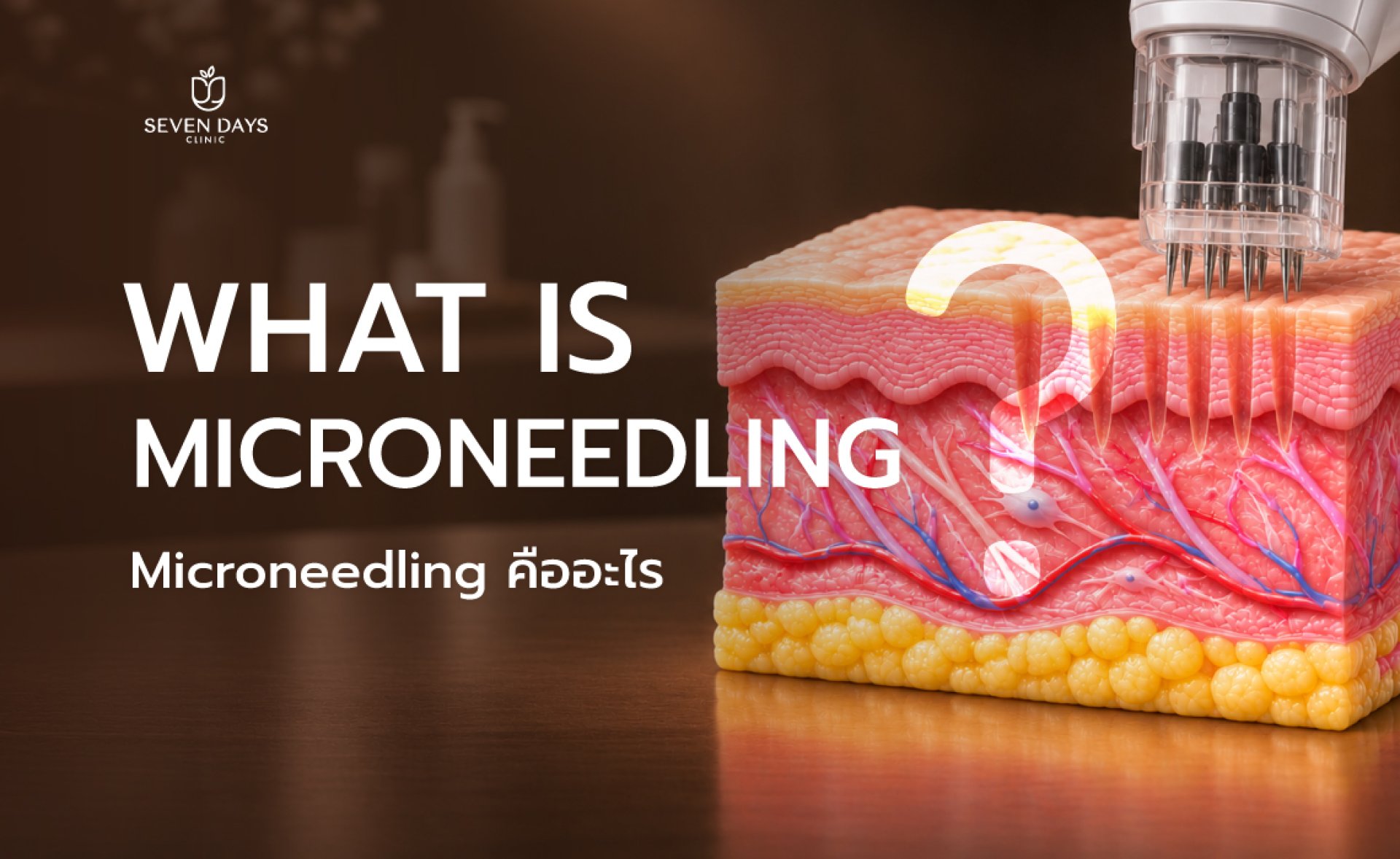
Microneedling is a procedure that uses tiny needles to create small, controlled punctures in the skin, stimulating the body's natural repair process. This response encourages the production of new collagen, an important component of the skin's structure. As a result, microneedling may help improve the appearance of certain acne scars and uneven skin texture.
During microneedling, the doctor selects the device and needle depth according to the treatment area, skin condition and individual concerns. The principle behind microneedling goes beyond creating pathways through the skin barrier: its primary purpose is to stimulate the skin's repair response.
Results from microneedling develop gradually as the skin produces collagen. Microneedling does not instantly fill depressed areas, and a series of sessions may be recommended following a medical assessment. The degree of improvement and the time needed to see changes vary from person to person.
How Does Topical Skincare Work?
Topical skincare works through ingredients applied to the skin. Depending on the formulation, these ingredients may attract moisture, soften the skin or reduce water loss. Skincare therefore remains an important foundation of daily skin care, including for people considering microneedling.
The outermost layer of the skin acts as a barrier. Ingredient penetration depends on several factors, including the properties of the substance, the product formulation and the condition of the skin barrier. It is inaccurate to assume that all skincare products remain only on the surface or penetrate to the same depth.
Unlike microneedling, applying skincare does not use needles to create controlled punctures that trigger skin repair. The two approaches have different roles, and microneedling does not replace an ongoing skincare routine. After microneedling, product selection and the timing of application should follow your doctor's advice, as the skin may temporarily be more sensitive.
How Does Microneedling Differ from Topical Skincare?
Microneedling and topical skincare play different roles in skin care. Microneedling uses tiny needles to stimulate the skin's repair process and collagen production. Skincare works through ingredients applied to the skin, addressing concerns according to each product's properties and formulation.
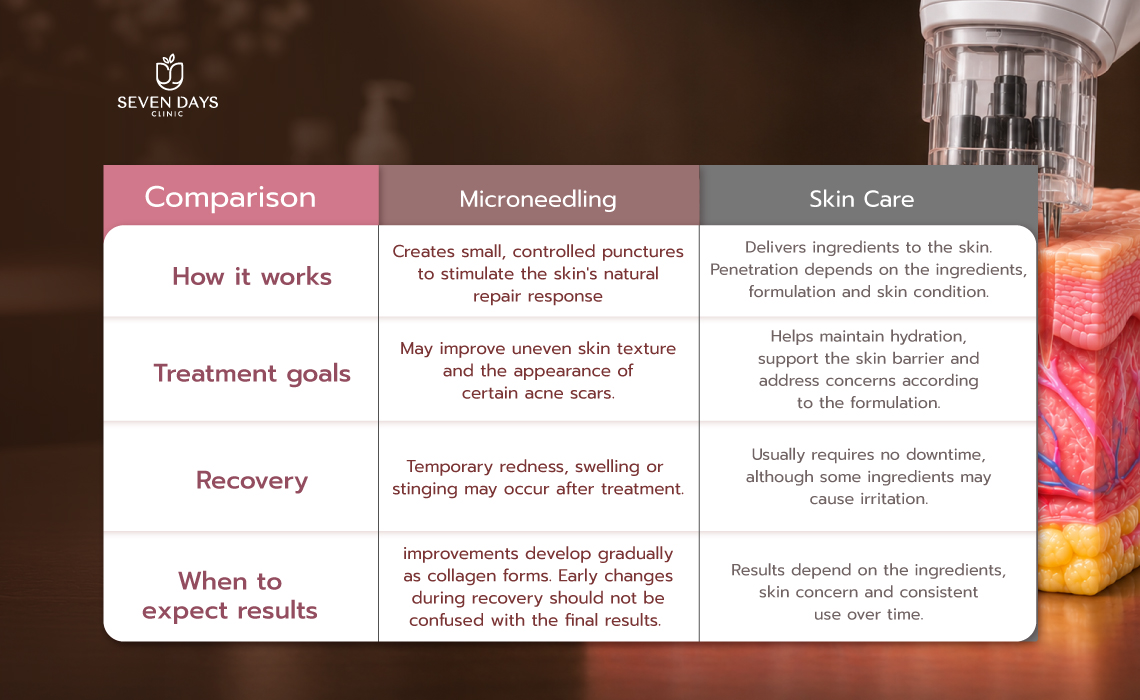
Microneedling does not replace an ongoing skincare routine, and topical products do not reproduce every effect of an aesthetic procedure. The right approach depends on your skin concerns, alongside consistent daily care. After microneedling, follow your doctor's guidance on which products to use and when to restart them, as your skin may temporarily be more sensitive to irritation.
What Skin Concerns Can Microneedling Help Address?
Microneedling may be an option for certain skin concerns. Before recommending treatment, a doctor will assess the type and severity of the concern, along with your skin condition. Concerns that may be considered for microneedling include:
- Uneven skin texture: Microneedling may help the skin's surface appear more even. However, the underlying cause matters, as roughness caused by clogged pores or skin inflammation may require a different approach first.
- Certain types of acne scars: Collagen stimulation may help depressed acne scars appear shallower. Different scar types respond differently to microneedling, and a combination of treatments may be needed.
- Fine lines: Microneedling may soften the appearance of some fine lines, with improvements developing gradually as the skin remodels.
Visible pores: Treatment may make enlarged pores less noticeable, but it cannot permanently eliminate them.
What Are the Main Types of Microneedling, and How Does Hycoox Compare?
Based on whether radiofrequency energy is used, microneedling can be divided into two main categories. Each has a different mechanism and its own treatment considerations.
1. Conventional Microneedling Without RF Energy
Conventional microneedling uses tiny needles to create small, controlled punctures in the skin, stimulating its natural repair process and collagen production. Examples include dermal rollers and pen-shaped devices such as Dermapen. These devices do not deliver RF heat through their needles.
A doctor may consider this type of microneedling for certain acne scars, uneven skin texture or some fine lines. Results depend on the skin concern, the device used and the individual's treatment plan.
2. Radiofrequency Microneedling
RF microneedling combines fine needles with radiofrequency energy to generate heat within targeted tissue. The aim is to stimulate skin remodelling. Its applications depend on the features and indications
How Is Hycoox Different?
Hycoox is an automatic injection device from South Korea that helps doctors deliver mesotherapy solutions or skin boosters into the skin. It combines multiple fine needles with a suction system to distribute the selected product across targeted areas. Injection settings can be adjusted according to the patient's skin condition and the product being used.
A key feature of Hycoox is its multi-needle cartridge, such as a nine-needle head that treats several injection points in a single shot. Its automatic vacuum-sensing system draws the skin against the injection head before delivery. The doctor can adjust suction intensity, injection speed and volume to suit the treatment plan.
Compared with conventional microneedling, the main difference is that Hycoox injects a selected product directly through its needles. Microneedling primarily creates small, controlled punctures to stimulate the skin's natural repair process. Hycoox does not deliver radiofrequency energy through its needles, which also distinguishes it from RF microneedling.
For skin rejuvenation with Hycoox, the doctor selects the injectable product and technique according to individual concerns. The expected benefits therefore depend on the product used and the treatment approach, rather than the device alone.
Microneedling uses tiny needles to stimulate skin repair and collagen production. It may help improve certain acne scars, uneven skin texture and some fine lines. Topical skincare works through product ingredients to maintain hydration, support the skin barrier and address specific concerns. These approaches have different roles and can complement each other within an appropriate skin care plan.
Hycoox, meanwhile, is an automatic multi-needle injector for mesotherapy solutions or skin boosters. Its primary function differs from microneedling, and it does not use RF energy. Results from Hycoox depend on both the injectable product and the doctor's technique.
Before choosing microneedling or another aesthetic procedure, have a doctor assess your skin and concerns to determine a suitable treatment plan. Consult a doctor at Seven Days Clinic to explore your options and receive personalised guidance on skin care before and after treatment.