
Botox for Wrinkles Program
Relax Facial Muscles, Reduce Wrinkles, and Achieve Smoother-Looking Skin
Botox for Wrinkles
Relax Facial Muscles, Reduce Wrinkles,
and Achieve Smoother-Looking Skin
One of the most noticeable signs of aging is the gradual appearance of facial lines and wrinkles. These may develop on the forehead, between the eyebrows, around the outer corners of the eyes as crow’s feet, or along the sides of the nose as Bunny Lines. Many of these wrinkles are associated with repeated facial expressions and muscle movements that occur naturally throughout everyday life.
There are many ways to care for the skin and minimize the appearance of wrinkles, ranging from skincare and facial massage to other aesthetic treatments. For those looking to specifically address wrinkles caused by facial expressions, a Botox treatment for wrinkles is a popular non-surgical option. Botox temporarily reduces muscle activity in targeted areas, helping soften the appearance of expression lines and allowing the overlying skin to look smoother.
In this article, Seven Days Clinic explains everything you need to know about Botox for wrinkles, including how the treatment works, its benefits, who may be suitable for the treatment, common injection areas such as forehead lines, frown lines, and crow’s feet, and the approximate number of Botox units that may be used in each area. This guide can help you better understand the treatment before consulting a doctor for a personalized assessment.
What Are Wrinkles?
Wrinkles are lines, folds, or creases that develop on the surface of the skin. They can result from repeated facial expressions and muscle movements, such as smiling, frowning, squinting, or raising the eyebrows, as well as natural changes in the skin that occur with age.
From the mid-20s onward, the skin gradually undergoes changes in collagen and elastin production. Combined with factors such as sun exposure, lifestyle habits, inadequate rest, and repetitive facial movements, fine lines and wrinkles may gradually become more noticeable, particularly on the forehead, between the eyebrows, around the eyes, and at the outer corners of the eyes.
In the early stages, wrinkles may be most noticeable when making facial expressions. These are known as Dynamic Wrinkles and include expression lines such as forehead lines, frown lines, and crow’s feet. Over time, some lines may remain visible even when the facial muscles are at rest. These are known as Static Wrinkles.
Because different types of wrinkles can have different underlying causes, choosing an appropriate wrinkle treatment should take into consideration the type, location, depth of the wrinkles, and individual facial anatomy.
What Causes Wrinkles?
Wrinkles can develop due to a combination of internal and external factors. Each factor can affect the skin’s structure, elasticity, collagen levels, and ability to retain moisture differently. Understanding the causes of wrinkles can help determine the most appropriate approach to wrinkle prevention and treatment.
1. Natural Aging
As we age, the skin gradually produces less collagen and elastin, two important components that help maintain skin firmness, elasticity, and structure. As these changes progress, the skin may become less resilient, making fine lines, wrinkles, and deeper creases more noticeable over time.
2. Repetitive Facial Expressions
Smiling, laughing, frowning, raising the eyebrows, and squinting repeatedly cause the facial muscles to contract and the overlying skin to fold in the same areas. Over time, these repetitive movements can contribute to Dynamic Wrinkles, including forehead lines, frown lines between the eyebrows, and crow’s feet around the eyes.
These expression lines may initially appear only when the facial muscles move but can gradually become more noticeable with age. For wrinkles primarily associated with muscle movement, Botox for wrinkles may be one of the treatment options considered after assessment by a doctor.
3. Sun Exposure and UV Radiation
Prolonged exposure to UV radiation can contribute to the breakdown of collagen and elastin within the skin, a process associated with photoaging. Over time, sun damage may lead to reduced skin elasticity, wrinkles, sagging, uneven skin tone, and other visible signs of premature skin aging.
Regular sun protection therefore plays an important role in helping prevent premature wrinkles and photoaging.
4. Dry and Dehydrated Skin
When the skin lacks sufficient moisture, fine lines may become more noticeable, particularly in areas where the skin is naturally thinner, such as around the eyes and on the forehead.
Although dry or dehydrated skin does not necessarily cause all types of wrinkles, insufficient hydration can make existing fine lines appear more prominent. Maintaining adequate skin hydration can therefore help the skin look smoother and healthier.
5. Lifestyle Factors
Lifestyle habits can also influence how the skin ages. Inadequate sleep, chronic stress, smoking, and behaviors that increase oxidative stress may contribute to changes in the skin’s structure and accelerate the appearance of premature skin aging.
This means that wrinkles are not determined by age alone. Daily habits, environmental exposure, facial muscle movement, and overall skin care can all influence when and how visible signs of aging begin to appear.
Therefore, the causes of wrinkles are often multifactorial rather than the result of aging alone. Identifying whether wrinkles are primarily related to facial muscle movement, changes in skin structure, sun exposure, dehydration, or lifestyle factors can help determine a more appropriate wrinkle treatment for each individual.
What Is Botox for Wrinkles?
Botox for wrinkles is a treatment that uses Botulinum Toxin Type A, which is injected into targeted facial muscles to temporarily reduce muscle activity. It works by inhibiting the release of acetylcholine, a neurotransmitter responsible for transmitting signals from nerves to muscles and triggering muscle contraction.
When the targeted muscles relax and contract less frequently, the overlying skin is repeatedly folded less. As a result, Dynamic Wrinkles, or wrinkles caused by facial expressions, can gradually appear softer and smoother. Common treatment areas include forehead lines, frown lines between the eyebrows, crow’s feet around the eyes, and Bunny Lines around the nose.
The effects of Botox are temporary and do not permanently stop the muscles from functioning. Muscle activity gradually returns over time as the effects wear off. The appropriate injection points and number of Botox units should therefore be determined by a doctor based on individual facial anatomy, muscle strength, treatment area, and the characteristics of the wrinkles.
How Does Botox for Wrinkles Work?
A Botox wrinkle treatment uses Botulinum Toxin Type A to temporarily reduce communication between the nerves and targeted facial muscles. It acts at the neuromuscular junction, reducing muscle contraction and limiting the repetitive folding of the skin caused by facial expressions.
The mechanism of Botox for wrinkles can be explained in three main steps:
1. Reduces Nerve Signals to the Muscles
Botulinum Toxin Type A temporarily inhibits the release of acetylcholine, a neurotransmitter involved in signaling muscles to contract. This reduces the activity of the targeted facial muscles for a period of time.
2. Reduces Muscle Contraction in the Treated Area
As muscle activity decreases, repetitive facial movements that cause the skin to crease in the same areas are reduced. These movements may include frowning, raising the eyebrows, squinting, and smiling, which can contribute to forehead wrinkles, frown lines, and crow’s feet.
3. Softens the Appearance of Dynamic Wrinkles
When the skin is repeatedly folded less often, Dynamic Wrinkles caused by facial muscle movement can gradually appear softer and smoother. This includes forehead lines, frown lines between the eyebrows, crow’s feet, and Bunny Lines around the nose.
The results of a Botox wrinkle treatment can vary depending on the treatment area, number of units used, muscle strength, facial anatomy, and the severity of the wrinkles.
Botox works temporarily. Over time, nerve signaling and muscle activity gradually recover as the effects of Botulinum Toxin Type A wear off. Therefore, Botox does not permanently paralyze or stop the facial muscles from functioning.

Who Is Botox for Wrinkles Suitable For?
Botox for wrinkles may be suitable for individuals who want to reduce the appearance of expression lines caused by repeated facial muscle movements. A doctor should assess the type of wrinkles, facial anatomy, and muscle activity before determining whether Botox is appropriate.
- Those who are beginning to notice Dynamic Wrinkles when smiling, frowning, squinting, or raising their eyebrows
- Those with forehead lines caused by frequent eyebrow raising or forehead muscle movement
- Those with frown lines or vertical lines between the eyebrows that become more noticeable during facial expressions
- Those with crow’s feet around the outer corners of the eyes that become more visible when smiling or laughing
- Those with Bunny Lines along the sides or bridge of the nose when making facial expressions
- Those who want to soften wrinkles associated with facial muscle movement and achieve smoother-looking skin
- Those looking for a non-surgical wrinkle treatment with relatively minimal downtime
The suitability of Botox can vary from person to person. A medical consultation is recommended to evaluate the type and severity of wrinkles, muscle strength, facial anatomy, and individual treatment goals.
Benefits of Botox for Wrinkles
A Botox wrinkle treatment is commonly used to address Dynamic Wrinkles caused by repeated facial expressions. By temporarily reducing the activity of specific facial muscles, Botox can reduce repetitive skin folding and help expression lines appear smoother.
The key benefits of Botox for wrinkles include:
- Softens expression lines and wrinkles: Helps reduce the appearance of forehead lines, frown lines, crow’s feet, and Bunny Lines caused by repetitive facial movements.
- Temporarily reduces targeted muscle activity: By decreasing muscle contraction in specific areas, repetitive folding of the overlying skin is reduced.
- Relatively quick treatment: The injection procedure generally takes a short amount of time, although the total treatment time varies depending on the number of areas being treated.
- Non-surgical treatment: Botox injections do not require surgical incisions, and most individuals can generally return to their usual daily activities following treatment.
- Customizable number of units: The amount of Botox can be adjusted according to the treatment area, facial anatomy, muscle strength, and individual needs following a doctor’s assessment.
- Helps create a more relaxed appearance: As prominent frown lines and expression wrinkles become softer, the overall facial appearance may look smoother and more relaxed.
- Can address multiple facial areas: Botox can be used in several areas where wrinkles are associated with facial muscle activity, with injection points selected according to individual anatomy and muscle movement.
Results from Botox for wrinkles can vary between individuals. Using a higher number of Botox units does not necessarily produce a better or more natural-looking result. The appropriate injection points and number of units should be determined by a doctor based on facial anatomy, muscle strength, the severity of the wrinkles, and the desired outcome.
Where Can Botox for Wrinkles Be Injected?
Botox for wrinkles can be injected into several areas of the face where expression lines are associated with repeated muscle contractions. Common Botox injection areas include:
1. Forehead Lines :
Botox can help soften horizontal forehead lines that become more noticeable when raising the eyebrows or making facial expressions. By temporarily reducing the activity of targeted forehead muscles, the overlying skin may appear smoother.
2. Frown Lines / Glabellar Lines :
Frown lines, also known as glabellar lines, develop between the eyebrows as a result of repeated frowning or contraction of the muscles in this area. In some individuals, they may appear as prominent vertical lines between the eyebrows.
3. Crow’s Feet :
Crow’s feet are fine lines that develop around the outer corners of the eyes and often become more noticeable when smiling, laughing, or squinting. Botox can temporarily reduce targeted muscle activity in this area, helping these expression lines appear softer.
4. Bunny Lines :
Bunny Lines are small wrinkles that appear along the sides or bridge of the nose, particularly when smiling, scrunching the nose, or making certain facial expressions. Botox may be used to reduce the muscle activity associated with these lines.
5. Chin Lines / Chin Dimpling :
In some individuals, repeated contraction of the chin muscle can create a dimpled, uneven, or wrinkled appearance. Botox may be used in carefully selected injection points to temporarily reduce muscle activity and help the chin surface appear smoother.
The appropriate Botox injection areas and number of units vary according to facial anatomy, muscle strength, wrinkle severity, the specific botulinum toxin product used, and individual treatment goals. A medical assessment should therefore be performed before treatment.
Common Botox Injection Areas and Approximate Units
The number of Botox units required for wrinkle treatment varies between individuals. The following ranges are approximate and should not be considered a fixed dosage for every patient.
- Forehead Lines: Approximately 15–30 Units
May help reduce forehead muscle activity and soften horizontal lines that become more noticeable when raising the eyebrows.
- Frown Lines: Approximately 6–25 Units
May help reduce contraction of the muscles involved in frowning, allowing lines between the eyebrows to appear softer and the overall expression to look more relaxed.
- Crow’s Feet: Approximately 10–25 Units
May help reduce targeted muscle activity around the outer corners of the eyes, softening wrinkles that appear when smiling, laughing, or squinting.
- Under-Eye Lines: Approximately 5–15 Units
In selected cases, Botulinum Toxin Type A may be considered for fine lines beneath the eyes that are associated with muscle movement. Because the under-eye area has delicate anatomy and is close to muscles involved in eyelid and facial movement, careful medical assessment and precise injection technique are particularly important.
The appropriate dosage can vary considerably depending on the Botulinum Toxin Type A product, treatment area, facial anatomy, muscle strength, and individual needs. Units are not necessarily interchangeable between different botulinum toxin products. The exact dosage and injection points should always be determined by a qualified doctor after an individual assessment.
Botox for Wrinkles Before and After Review
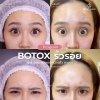
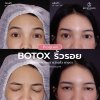
Botox for wrinkles uses Botulinum Toxin Type A, which is injected into targeted facial muscles to temporarily reduce muscle activity. For those concerned about facial wrinkles, whether fine expression lines or more noticeable wrinkles, Botox may be one of the treatment options considered depending on the type and cause of the wrinkles.
If you are looking for a Botox treatment in Bangkok, you can consult a doctor at Seven Days Clinic for a personalized facial assessment. The doctor will evaluate your facial anatomy, muscle activity, and wrinkle concerns to develop a treatment plan tailored to your individual needs and desired results.
 MakeWebEasy