5 Skin Types: How to Identify and Care for Your Skin
5 Skin Types: How to Identify Your Skin Type and Care for It Properly
Everyone's skin is unique. Choosing the right skincare products or treatment programs should begin with understanding your own skin type. Using products that are not suitable for your skin may lead to various skin concerns such as acne, dryness, excess oil, or irritation.
At Seven Days Clinic, we invite you to discover the 5 main skin types, learn how to identify your skin, and explore beauty tips tailored to each skin condition.
How to Identify Your Skin Type at Home
Follow these simple steps:
- Cleanse your face with your regular facial cleanser.
- Avoid applying any skincare products afterward.
- Wait for 1–2 hours.
- Observe how your skin feels and looks.
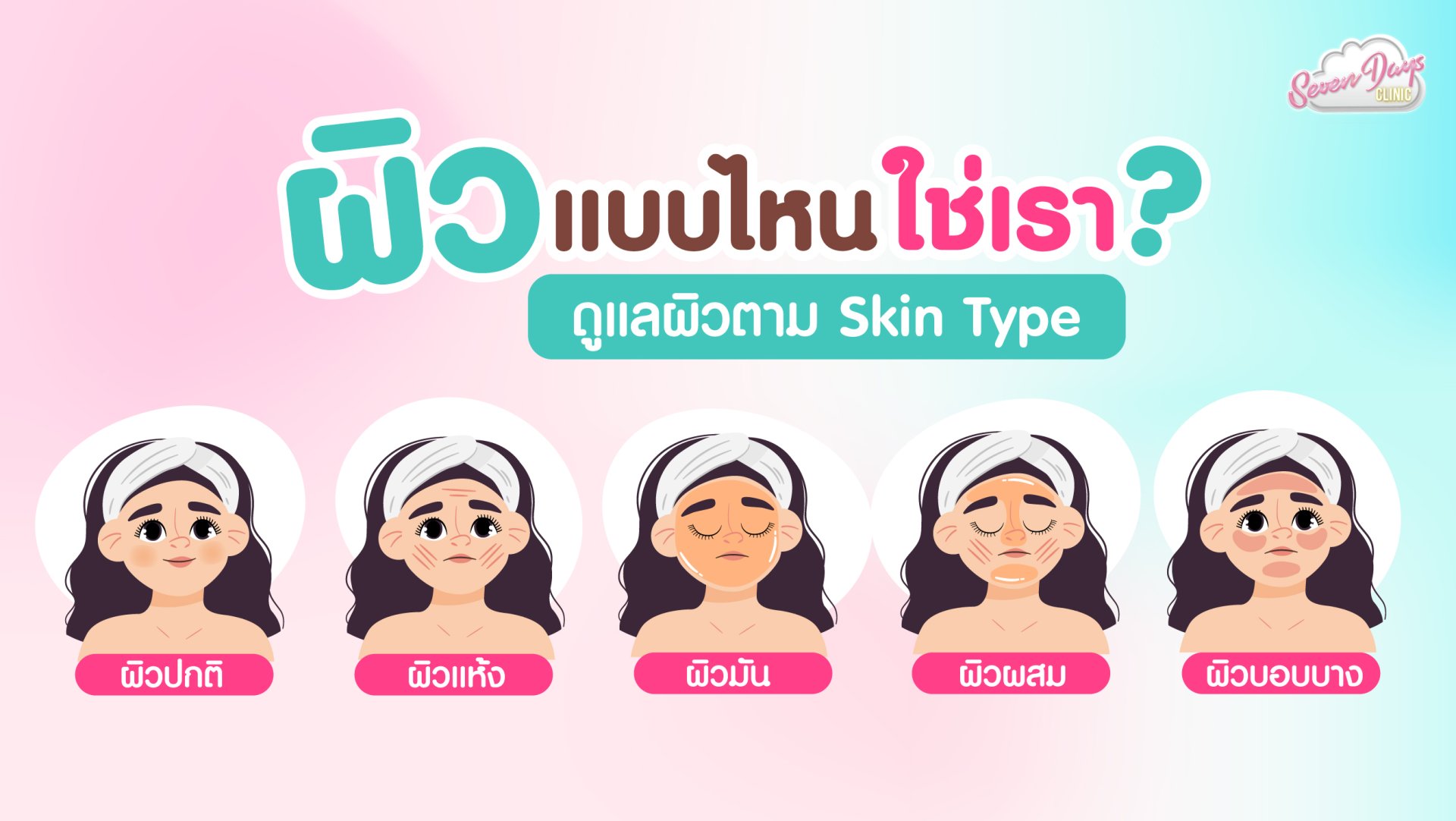
- Comfortable skin with no excessive dryness or oiliness → Normal Skin
- Tight, flaky, or rough skin → Dry Skin
- Oily all over the face → Oily Skin
- Oily in the T-zone but dry on the cheeks → Combination Skin
- Easily irritated, red, itchy, or sensitive → Sensitive Skin
Types of Facial Skin
Normal Skin
Normal skin is considered the most balanced skin type, with an ideal level of moisture and oil production. It appears healthy, smooth, and is less prone to common skin concerns.
Characteristics of Normal Skin
- Smooth and even texture
- Small pores
- Neither too oily nor too dry
- Makeup lasts well throughout the day
- Less prone to acne breakouts
Beauty Tips
- Cleanse your face gently twice a day.
- Apply moisturizer regularly.
- Use sunscreen with SPF 30 or higher every day.
- Drink enough water to maintain hydration.
Dry Skin
Dry skin occurs when the skin lacks moisture or natural oils, weakening the skin barrier. As a result, the skin may feel tight, rough, flaky, and more susceptible to irritation.
Characteristics of Dry Skin
- Tightness after cleansing
- Flaky or peeling skin
- Makeup tends to look patchy
- Less visible pores
- Fine lines may appear more easily
Beauty Tips
- Choose gentle cleansing products.
- Avoid using very hot water.
- Apply moisturizer immediately after cleansing.
- Look for skincare products containing Hyaluronic Acid or Ceramides.
Oily Skin
Oily skin results from overactive sebaceous glands producing excess sebum, especially in the T-zone area. This can make the skin appear shiny and increase the likelihood of clogged pores and acne.
Characteristics of Oily Skin
- Excess oil throughout the day
- Enlarged pores
- Frequent clogged pores or acne
- Makeup tends to slide off easily
- Noticeable shine on the forehead and nose
Beauty Tips
- Wash your face no more than twice daily.
- Choose oil-free skincare products.
- Use lightweight gel-based moisturizers.
- Avoid over-cleansing, which may trigger more oil production.
Combination Skin
Combination skin is one of the most common skin types. It features both oily and dry areas on the face, requiring different care for different zones.
Characteristics of Combination Skin
- Oily T-zone (forehead, nose, and chin)
- Dry or dehydrated cheeks
- Enlarged pores in certain areas
- Occasional breakouts around the forehead and nose
- Uneven makeup adherence across the face
Beauty Tips
- Use a moisturizer that provides balanced hydration.
- Choose skincare products designed for combination skin.
- Treat oily and dry areas according to their needs.
- Use non-comedogenic sunscreen to prevent clogged pores.
Sensitive Skin
Sensitive skin is not actually a skin type but a skin condition characterized by increased reactivity to external triggers such as weather changes, pollution, dust, or certain skincare ingredients.
Characteristics of Sensitive Skin
- Redness occurs easily
- Stinging, burning, or itching sensations
- Dry and flaky patches
- Frequent rashes or acne flare-ups
- Reactions after trying new skincare products
Beauty Tips
- Use gentle and fragrance-free products.
- Avoid products containing alcohol and harsh ingredients.
- Patch-test new products before use.
- Avoid excessive scrubbing or harsh exfoliation.
How to Maintain Healthy Skin Regardless of Skin Type
No matter what skin type you have, these basic skincare habits can help keep your skin healthy and strong:
- Cleanse your skin appropriately.
- Apply moisturizer daily.
- Wear sunscreen every day.
- Get enough sleep.
- Drink at least 6–8 glasses of water daily.
- Maintain a healthy and balanced diet.